


In this article, we will try to find out what are the most common symptoms of helminthiasis in adults, whether they can be asymptomatic, and what types of helminthic infestations are most common in our country.
Introduction to terminology
Human helminth infections are usually caused by parasitic worms of three classes: Nematoda (nematodes) - roundworms, Cestoda (cestodes) - tapeworms, Trematoda (trematodes) - flukes.According to the pathogen class, all human helminthiasis are conventionally divided into:
- Nematodes are helminth infections associated with infestation by roundworms or their larvae.The most famous nematodes are enterobiasis, ascariasis, hookworm, toxocarosis and strongyloidiasis.
- Cestodoses are caused by parasitism of tapeworms or their larval forms.The most common cestodiases are diphyllobothriasis, taeniasis and taeniarhynchiasis, hymenolepiasis and echinococcosis.
- Trematodes are helminth infections caused by various types of flukes.The most common diseases in our country are opisthorchiasis, clonorchiasis, less often fascioliasis, and very rarely paragonimiasis.
In relation to the territory of our country, all helminthiasis can be divided into:
- Typically, that is, it is often found among the population of our country;
- Exotic, caused by population migration and tourism to other countries.
Detection and treatment of exotic helminth infections is a more complex and time-consuming process, since laboratories may not have the necessary reagents to perform laboratory tests.The following types of helminthic infestations are typical for the area of our country.
Which population groups are most susceptible to infection?
Helminthic infestations occur more often in the following groups:
- Young children due to active knowledge of the world and lack of personal hygiene skills.
- Children organized in groups (kindergartens, schools, camps, sanatoriums, etc.).Close interaction, shared habitat and exchange of toys contribute to the spread of geohelminthiasis through a simple life cycle.
- Adults who have close contact and work with children, including teachers and parents.
- People with certain eating habits: consumption of raw or poorly processed meat, fish, seafood, herbs, etc.Great importance is attached to national cuisine (sushi, stroganina, yukola, porsa and other dishes), love for drying, salting and smoking.
- People living in endemic areas, tropics and subtropics.
- People living in poor sanitary conditions, with a lack of access to quality water resources and sanitation.
- People closely related to agriculture and animal husbandry, who live near animals.
When and who should be tested?
Based on belonging to risk groups and characteristics of the course of helminthic infestations, examination for helminthiasis must be performed in the following cases:
- Children, organized and disorganized, at least once a year in the absence of symptoms.
- Adults who work with children and in catering facilities, doctors, sellers of children's goods and food products.
- Children and adults enter educational institutions, sanatoriums, hospitals, boarding houses, hospices and other institutions that ensure the presence of a large number of people in one area.
- Children and adults with skin and bronchopulmonary allergic diseases that are resistant to traditional methods of therapy and elimination diet.
- Children and adults with symptoms of chronic damage to the gastrointestinal tract: nausea, vomiting, diffuse abdominal pain, diarrhea, pain in the epigastric and periumbilical regions, malabsorption syndrome.
- Children and adults with symptoms of damage to the hepatobiliary system - hepatosplenomegaly, jaundice, pain in the right hypochondrium, increased AST, ALT, GGTP, alkaline phosphatase, portal hypertension.
- Children and adults with a low temperature of unknown etiology for a long time.
- Children and adults with severe asthenic syndrome: frequent headaches, weight loss, bulimia or lack of appetite, unmotivated weakness, fatigue, sleep disturbance.
- Children and adults with microcytic and normocytic anemia resistant to traditional treatment.Anemia with B12 deficiency accompanies 2-4% of cases of diphyllobothriasis, less often teniarhynchiasis, ascariasis and other helminthiasis.
Characteristics of the course of helminthic infestations
The course of any helminthic infestation can be divided into several periods:
- Infection and its clinical manifestations.Most helminth infections have no symptoms of infection, but in strongyloidiasis, hookworm and some others, so-called cercariosis occurs - diseases caused by larvae penetrating the skin.
- The incubation period is the time from the moment of infection to the first clinical manifestations.
- The acute phase, most often caused by the migration of larvae in the human body, their molting, maturation into sexually mature individuals, the first laying of eggs and the first encounter of the human body with unknown antigens.The duration of the acute phase usually ranges from a few days to a few weeks.Sometimes the acute phase is absent or weakly expressed, which is more often observed with a low degree of invasion or with natives who have "immune memory".
- The chronic phase occurs in the absence of treatment or its ineffectiveness and is associated with the direct influence of sexually mature persons.
The duration of the infestation depends on the lifespan of the helminth and the probability of self-infection.
From this point of view, the course of all helminthiasis can be presented in the form of several basic schemes.
- Scheme 1: the course of the disease has the form of a sinusoid.Beginning (moment of infection) – increase of symptoms to a certain level (degree of severity) – transition to chronic phase with periodic exacerbations.This type of flow is characteristic of opisthorchiasis, clonorchiasis, fascioliasis and strongyloidiasis.
- Scheme 2: the course of helminthiasis has the form of a plateau.An infection with a subsequent increase in symptoms to a certain point, after which the patient notices that the symptoms remain constant or decrease and disappear.A similar course is typical for many invasions: trichinosis, taeniasis, diphyllobothriasis, ascariasis.
- Scheme 3: the course of helminthiasis is characterized by a continuous increase in symptoms, which can ultimately lead to the death of the patient.These are, as a rule, massive invasions or helminthiasis, which occur with dissemination against the background of immunodeficiency (disseminated strongyloidiasis).
Next, let's look at where worms live in the human body.Helminth infections can affect any human organ, however, for the sake of systematization, several main "favorite" localizations in the host's body can be identified:
- The intestine is the most logical habitat for many human worms, for example, roundworms, pinworms, whipworms, hookworms, beef and pork tapeworms, etc.Here, the parasite attaches itself to the intestinal wall in one way and performs its "subversive" activity, most often stealing the host's food.
- The liver and bile ducts are a favorite habitat of opisthorchids, clonorchids and fasciola.Also, the liver is often affected during the migration of helminth larvae, for example, lung fluke, echinococcus, etc.
- Lungs and bronchi.The life cycle of many nematodes (ascaris, hookworms, intestinal eels) cannot take place without larval migration through the bronchopulmonary system.For other helminths, the lungs are the final target and habitat of adults (paragonimiasis).
- Central nervous system.It is most often affected by cysticercosis, echinococcosis, toxocariasis, paragonimiasis and other invasions.This is usually due to the migration of larval forms and their spread through the bloodstream.
- The skin, as a rule, becomes a habitat for larval forms, as well as various filaria.
- Eyes - filariasis, toxocariasis.
- Venous plexuses of the bladder, uterus and intestines in schistosomiasis.
Symptoms of helminthosis
Generally speaking, the clinical picture of helminthic infestations consists of the following syndromes:
- Toxic-allergic.The main reasons for the development of allergic and toxic reactions are the metabolic products of adults and larval forms and their release of toxins.In humans, worms can cause skin rashes such as urticaria, allergic and atopic dermatitis, and sometimes eczema.The rash is recurrent and difficult to respond to traditional treatment.
- Dyspeptic.Dyspeptic symptoms include nausea, vomiting, heartburn, belching, bitterness in the mouth and flatulence.Diarrhea or loose stools without increasing frequency of bowel movements are common.Dyspepsia is more typical for helminths living in the intestines (ascariasis, trichuriasis, etc.), and rarely occurs in tissue helminthiasis (echinococcosis, cysticercosis, toxocariasis, etc.).
- Maldigestion and malabsorption syndrome.It is also more typical for intestinal invasions, especially those where sexually mature parasites live in the small intestine and duodenum (taeniasis, diphyllobothriasis, etc.)
- Abdominal pain: in children - more often diffuse, in the umbilical region, right iliac region, simulating appendicitis.In adults, the localization of pain is more specific.Sometimes the pain syndrome due to helminthic infestation can imitate "acute abdomen".
- Bronchopulmonary.Most often caused by the migration of parasite larvae into the alveoli, followed by movement into the bronchial tree, trachea and oropharynx.The main symptoms at this stage are a cough, usually productive, with mucous or mucopurulent sputum, the appearance of wet and dry whistling, a change in the nature of breathing to heavy or sharp with prolongation of exhalation.With such invasions (ascariasis, strongyloidiasis, ankylostomiasis), Loeffler's syndrome can be observed.In some invasions (for example, paragonimiasis), the lungs are the usual habitat of adults.Clinical manifestations in this case are different.Chronic cough with sputum and blood, hemoptysis, radiological changes such as pneumofibrosis, cystic lesions of lung tissue often mimic the picture of pulmonary tuberculosis.
- Worms can cause anemic syndrome in humans.The development of anemia can be caused by direct consumption of the host's blood (hookworm), theft from the host (ascariasis, taeniasis, diphyllobothriasis, etc.), stomach and intestinal dysfunction (teniarinosis, taeniasis, etc.) and exposure to toxins.Anemia is more often microcytic iron deficiency, and in some helminthiasis, macrocytic and B-12 deficiency.
- Asthenia, as a sign of the presence of worms in the human body, is characterized by sleep disturbance, dyssomnia, increased irritability, aggressiveness, increased fatigue, hyperactivity and lack of attention in children.It is difficult for the patient to concentrate on work and concentrate.An infected person may experience unexplained weight loss, loss of appetite (or, conversely, increased appetite).
- Intoxication-inflammatory syndrome is manifested in the form of an increase in temperature up to 38 degrees and above, myalgia and arthralgia, leukocytosis and an increase in ESR in CBC.The degree of its severity depends on the immune status of the patient and the stage of invasion.The acute phase occurs more often than the chronic phase with fever and a flu-like condition.The chronic phase is more characterized by a low temperature or a normal body temperature.
- Worms in humans are often the cause of unexplained asymptomatic eosinophilia.Eosinophilia is most characteristic of nematodes and trematodes and may be accompanied by generalized leukocytosis.
In the table below, we have tried to summarize the available information on the symptoms of worm infection accompanying the most common helminthic infestations in humans.
| Helminthiasis | Symptoms of infection | Incubation period | Acute phase | Chronic phase |
|---|---|---|---|---|
| Enterobiasis | no | 10-15 days | Perianal itching, diffuse abdominal pain, rarely diarrhea, nausea, vomiting.Dysomnia, nocturnal screams and crying in children.Persistent vulvovaginitis, labia synechiae. The total duration of the invasion is about a month or two (if there is no re-infection) |
|
| Ascariasis | no | About a week | By 2 weeks, the acute phase is caused by larval migration.Symptoms during this period are fever, muscle and joint pain, skin rash and itching, signs of bronchitis or pneumonia (eosinophilic infiltrative changes in lung tissue).Bronchoobstruction may occur. | Decreased appetite, nausea, vomiting, abdominal pain (near the navel, right iliac region), intestinal rumbling and flatulence.Symptoms of asthenia are persistent headaches, weakness, fatigue.Symptoms of anemia and hypovitaminosis.Total duration of invasion (in the absence of re-infection) - 1 year |
| Trichocephalosis | no | 1-1.5 months | Pain along the colon, right iliac region, nausea, vomiting, salivation, flatulence, stool instability, presence of blood and mucus in the stool (total duration of invasion is up to 5-7 years). | |
| Diphyllobothriasis | no | It is erased, as the clinical picture of the invasion gradually develops | There is no acute phase as such.Symptoms appear and progress slowly.General asthenia that increases over time, skin rash, diffuse abdominal pain, sometimes in the right iliac region, nausea, vomiting, loss of appetite and progressive weight loss, stool instability, signs of anemia, glossitis, hepatosplenomegaly, neurological symptoms (paresthesia, impaired motor function, etc.). The duration of the invasion is up to 10 years or more. |
|
| Taeniasis and teniarynchosis | no | It is erased, as the clinical picture of the invasion gradually develops | There is no acute phase as such.The following symptoms appear and intensify: weakness, fatigue, headache and other symptoms of asthenia, mild or moderate anemia, diffuse abdominal pain and discomfort, bulimia or loss of appetite, progressive weight loss, drooling, nausea, vomiting, rash like urticaria, rare damage to the nervous system, Meniere's epilepsy, syndrome | |
| Opisthorchiasis | no | 2-4 weeks | Increased temperature, weakness, fatigue, eosinophilia and leukocytosis, pain in the abdomen and liver area, loose stools, allergic rash, hepatosplenomegaly, jaundice. | Symptoms of intestinal and hepatobiliary dyspepsia, hepatomegaly, jaundice, pain in the liver, biliary colic, pain in the waist (pancreatitis), gradual increase in liver failure may occur. |
| Clonorchiasis | no | 2-3 weeks | Same as opisthorchiy, but more pronounced | The same as for opisthorchiasis.High probability of developing cirrhosis and cholangiocarcinoma |
| Hookworm and nekatoriosis | 2-3 days after infection, a papular or urticarial itchy rash appears at the site of larval penetration, often resembling tortuous passages.The duration of this period is up to 1.5 - 2 weeks. | Practically absent | Due to larval migration, about 2-4 weeks.Fever, skin rash, symptoms of bronchitis, bronchopneumonia - productive cough, wet, dry wheezing, sometimes bronchial obstruction.Characteristic is the creation of volatile eosinophilic infiltrates in the lung tissue (Leffler's syndrome). | The most important clinical sign is moderate to severe iron deficiency anemia.Another significant criterion is hypoalbuminemia, edema syndrome.Nausea, vomiting, pain in the epigastric region, flatulence, fatigue, headache, general asthenia.The total duration of the invasion is up to 20 years. |
| hymenolepiasis | no | It is expressed implicitly, 2-3 weeks are enough for an adult to mature from a larva | As such, the acute phase is not pronounced;symptoms increase and are characterized by nausea, vomiting, salivation, diffuse abdominal pain and loose stools.Damage to the nervous system in the form of headache, dizziness, fainting.Allergic manifestations - exanthema type rash, urticaria, Quincke's edema, allergic rhinitis.Pale skin with an icteric tinge.Body temperature is often normal. | |
| Fascioliasis | no | 1-8 weeks | Fever, pain in the liver and epigastrium, jaundice, hepatomegaly, loose stools, allergic rash, eosinophilia and leukocytosis | Hepatomegaly, liver pain, hepatobiliary dyspepsia, increased liver failure, secondary cholecystitis and pancreatitis |
| Strongyloidiasis | For 1-2 days, mild itching and a papular rash appear at the point of penetration of the larvae, which quickly disappear. | Practically absent | On the third to fourth day from the moment of infection, fever, myalgia, joint pain, cough with sputum, wet and dry wheezing, and bronchial obstruction are possible.Radiography reveals volatile eosinophilic infiltrates (Leffler's syndrome).An allergic rash often appears on the skin. | Pain in the epigastric, periumbilical area, less often in the liver, belching, heartburn, nausea, vomiting, loss of appetite and weight, biliary dyspepsia, diarrhea (usually enteritis type, impurities in feces are rare, usually with massive invasion), hepatomegaly, jaundice.The infestation lasts for years due to regular self-infection. |
| Trichinosis | Stomach pain, nausea, vomiting, diarrhea may occur | From 1-2 days to 4-5 weeks, on average 10-25 days | After the infection, the intestinal phase first begins - abdominal pain, nausea, diarrhea, then generalized - severe muscle pain, swelling of the eyelids, face, less often the trunk, rash according to the type exanthema, in severe cases hemorrhagic, high fever (sometimes low fever) for several weeks. |
Encapsulation of larvae and their preservation in skeletal muscle for 10 or more years. |
| Paragonimiasis | no | 2-3 weeks, can be reduced to a few days | Abdominal pain, acute stomach pain, diarrhea.Gastroenterological symptoms are replaced by symptoms of damage to the bronchi and lung tissue - cough with sputum, chest pain, pneumonia, exudative pleurisy | Fever or prolonged low-grade fever, prolonged cough with sputum and blood, hemoptysis, chest pain, shortness of breath, weight loss, X-ray showing pulmonary fibrosis, pleural adhesions, thin-walled cysts in the lower parts of the lungs |
How to confirm the presence of worms in the body?
We have come to the most frequently asked questions when visiting a doctor.How can you tell if there are worms in the human body?Is it possible to do it yourself without leaving home?
Therefore, it is possible to determine the presence of helminthic infestation at home only in the following cases:
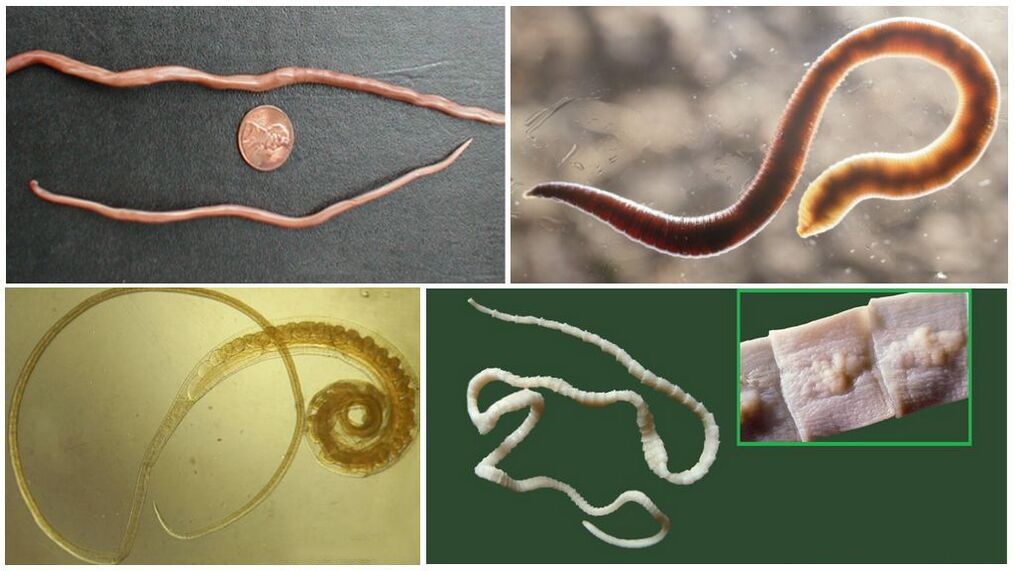
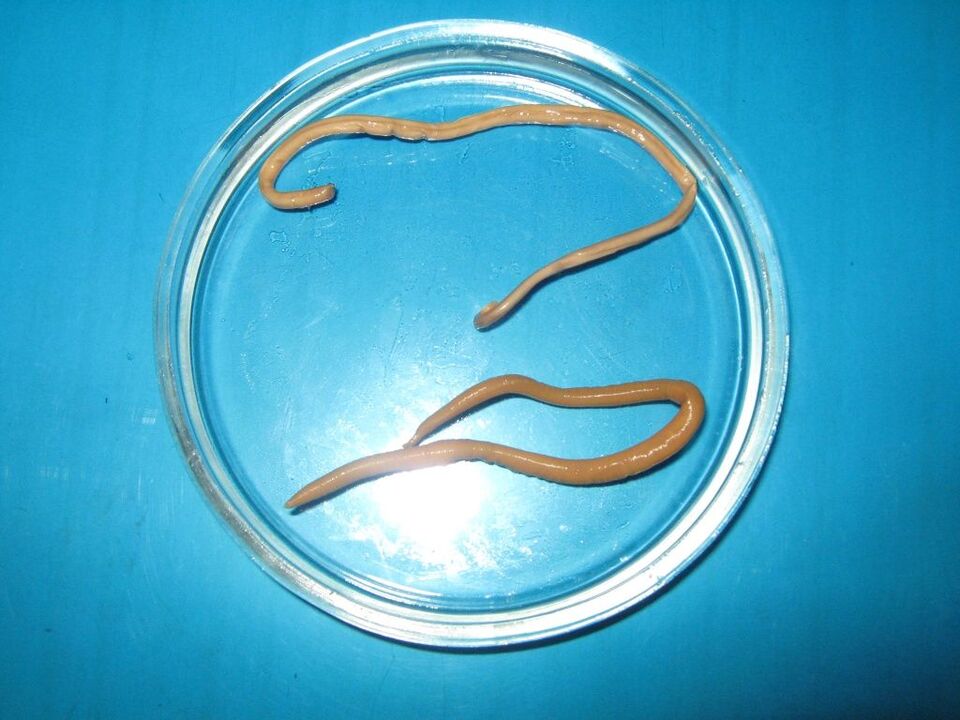
- Visualization of worms in feces (adult live or dead helminths, their fragments).Of course, only those helminths that live in the human intestines can be found in feces.As a rule, helminths are detected during a mass infestation.
- Visualization of tapeworm segments in feces.
In all other cases, the diagnosis can be confirmed using 2 main laboratory diagnostic methods:
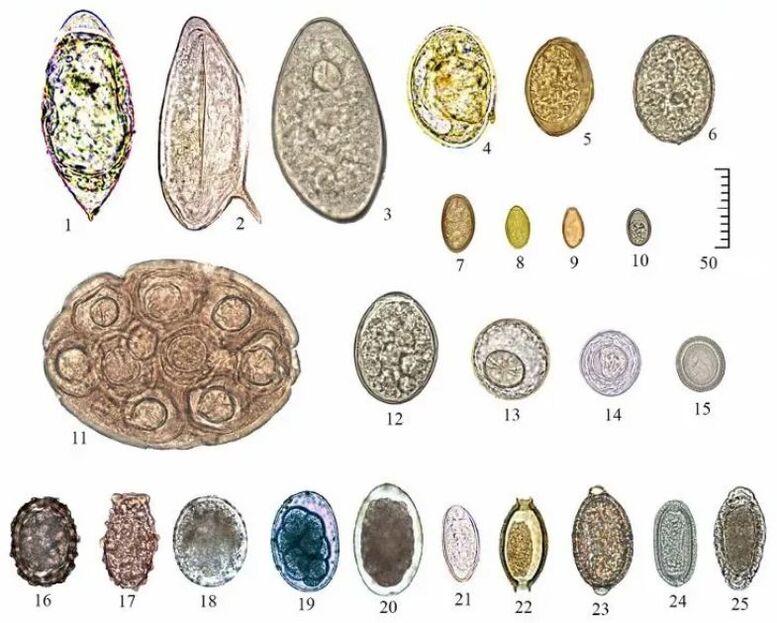
- Various modifications of ovoscopy.Worm eggs have morphological differences and microscopic sizes;it is useless to try to examine them in feces.
- Serological reactions, including PCR.

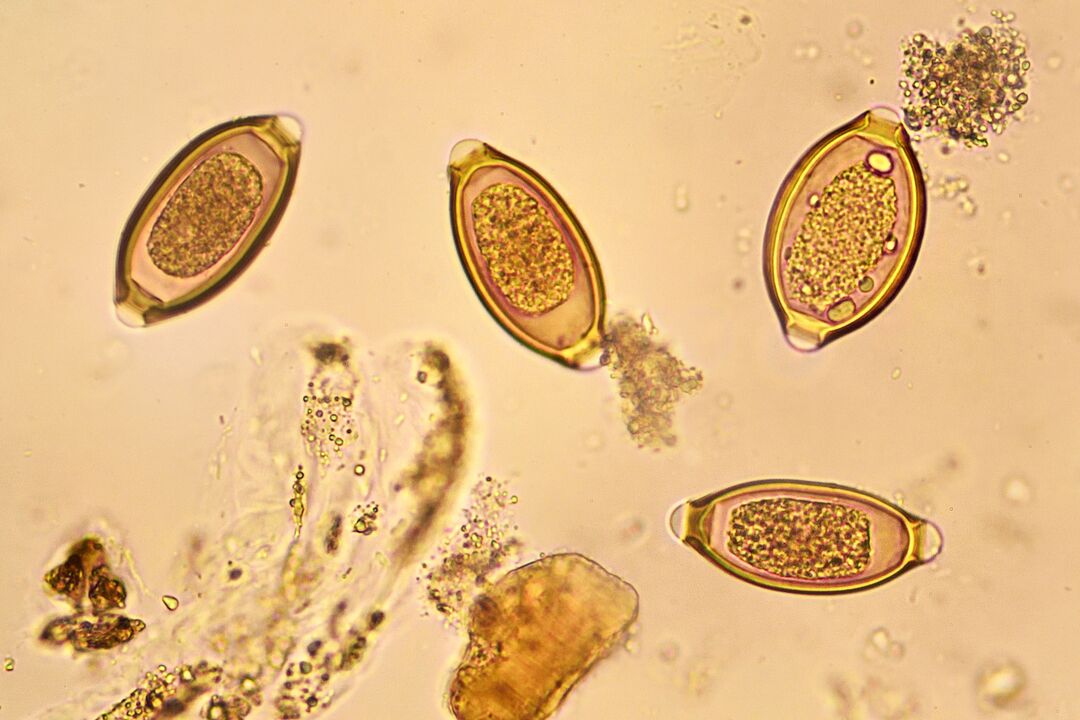
For different invasions, the range of laboratory tests is different.It is important to understand that standard stool analysis for helminth eggs and scraping for enterobiosis are screening methods aimed at identifying the most common intestinal helminth infections in risk groups.At the same time, individual microscopy is only about 50% informative.You can see what worm eggs look like under a microscope in the picture below.The vertical scale represents the size in µm.
Treatment with drugs and chemoprophylaxis
Treatment of human helminthiasis includes prescribing appropriate anthelmintic, as well as symptomatic and pathogenetic agents.In this article, we will not discuss in detail the dosages and treatment regimens for individual helminthic infestations;Let's just note that the prescription of drugs should be done by a doctor (pediatrician, therapist, infectious disease specialist, parasitologist) in accordance with the clinical picture, laboratory test data and the patient's condition.

Chemoprophylaxis of helminthiasis is the prophylactic use of anthelmintic drugs active against geohelminthic infections in risk groups and endemic areas.Since the overall incidence of geohelminthiasis among the population as a whole is low, chemoprophylaxis can be carried out once a year, preferably in autumn or spring.
Preventive measures
Measures to prevent worm infection are conventionally divided into individual and public.Individual prevention includes:
- Respecting the rules of personal hygiene among family members and in groups, teaching children the rules and monitoring their implementation.
- Thorough processing of greens, vegetables and fruits before direct consumption.
- Rejection of consumption of raw, poorly cooked meat from pigs, cattle and other animals, salted, dried and smoked meat that has not passed sanitary-epidemiological control.
- Refusal to consume fish that has not passed sanitary and epidemiological control, including salted, smoked, dried, caviar and other fish products.
- Drink only high-quality water for drinking and cooking, including when traveling.
- Before going to tropical and subtropical countries, it is necessary to get advice from an infectologist (parasitologist) and recommendations for laboratory diagnostics after returning.The infectious disease specialist decides on the need for chemoprophylaxis.
- Refusal to swim in fresh water, walk barefoot or lie on grass in endemic tropical countries.
- Refusal to eat on the street, in unverified cafes and other public catering establishments.
- Annual clinical examination with OAC, OAM, standard coproovoscopy and scraping for enterobiosis.These events are especially relevant in families with children, adults working in organized children's groups, hospitals, sanatoriums, etc.
Public prevention consists in organizing control over food products sold in stores and markets, timely detection of sick domestic animals and infected people and their treatment.It is of great importance to monitor water resources, improve settlements, assess the degree of infection of wild mammals, control the limits of naturally focal helminthiasis and the number of stray animals.